
11 Best Towns In Spain For Retirees
Spain holds more retiree-friendly small towns at workable price points than almost any country in Western Europe. The eleven towns ahead reach across Andalusia, the Costa Blanca, the Costa del Azahar, Galicia, and two of Spain's island archipelagos. Each runs on a specific anchor that suits a slow retirement pace: Nerja's Balcón de Europa above the Alboran Sea, Lugo's intact 3rd-century Roman walls, Mahón's natural harbour on Menorca, Puerto de la Cruz's volcanic coastline on Tenerife. Several offer Mediterranean climate at well below the cost of Marbella or Ibiza.
Nerja

Set along the Costa del Sol east of Málaga, Nerja combines Mediterranean beaches with whitewashed Andalusian streets and a relaxed coastal pace. The Balcón de Europa promenade is the social heart of town, where retirees gather for sea views, café stops, and evening walks above the cliffs. Burriana Beach offers calmer waters and waterfront dining, while the Nerja Caves a few kilometers east contain enormous prehistoric chambers that host the annual Festival Internacional de Música y Danza Cueva de Nerja inside the rock formations during the summer season. Retirees benefit from healthcare through Hospital Comarcal de la Axarquía in nearby Vélez-Málaga and several private clinics serving the Costa del Sol.
Almuñécar

On Granada's tropical coast, Almuñécar combines warm weather, palm-lined beaches, and a gentle rhythm that suits retirees seeking daily outdoor living. The hilltop San Miguel Castle overlooks both the old quarter and the Mediterranean shoreline, while El Majuelo Botanical Park has shaded walking paths filled with subtropical plants and Roman archaeological remains from the fish-salting industry that ran here under the Romans as Sexi. Playa San Cristóbal and Playa Puerta del Mar are central gathering places for locals and expats, with long promenades suited to daily strolls. The town has regular bus access to Granada and Málaga, where larger hospitals and specialized healthcare services are available.
Mojácar

Rising above the Almería coastline in southeastern Spain, Mojácar's whitewashed hillside architecture is suited to one of the driest and sunniest climates in Europe. Narrow cobbled streets wind through Mojácar Pueblo past artisan shops, tiled plazas, and overlooks facing both the Mediterranean and the Sierra Cabrera mountains. Down along the coast, Playa de Mojácar stretches for miles with calmer sections to the south favored by retirees. The historic Fuente Pública fountain in the center of town marks the location where, in 1488, the Moorish leader Alabez negotiated the surrender of Mojácar to the Catholic Monarchs Ferdinand and Isabella in the speech now preserved on a tiled plaque at the site.
Denia

Situated on the northern Costa Blanca, Denia balances beach access with a more grounded atmosphere than some of Spain's resort-heavy coastal cities. Denia Castle rises above the harbour and historic center, where old fishing streets and open-air markets still serve as essential parts of daily life. Las Marinas Beach is a popular spot north of town, while the marina provides ferry connections to the Balearic Islands. Nearby Montgó Natural Park offers walking trails and broad coastal views that suit active retirees seeking accessible recreation. Quality healthcare is another draw of Denia, anchored by Hospital Marina Salud, one of the strongest regional facilities along the Costa Blanca.
Jávea

Framed by cliffs, coves, and the Montgó mountain massif, Jávea appeals particularly for its mild coastal climate and slower Mediterranean pace. Arenal Beach serves as the town's social center with its promenade and calm shoreline, while Cabo de San Antonio is the place for dramatic coastal panoramas. The old town preserves whitewashed buildings and Gothic architecture centered around the 14th-century San Bartolomé Church, which still hosts daily Catholic mass services. Marina Salud hospitals and regional clinics support healthcare needs, while the sizable international community has contributed to strong English-speaking services and retiree-oriented amenities.
Peñíscola
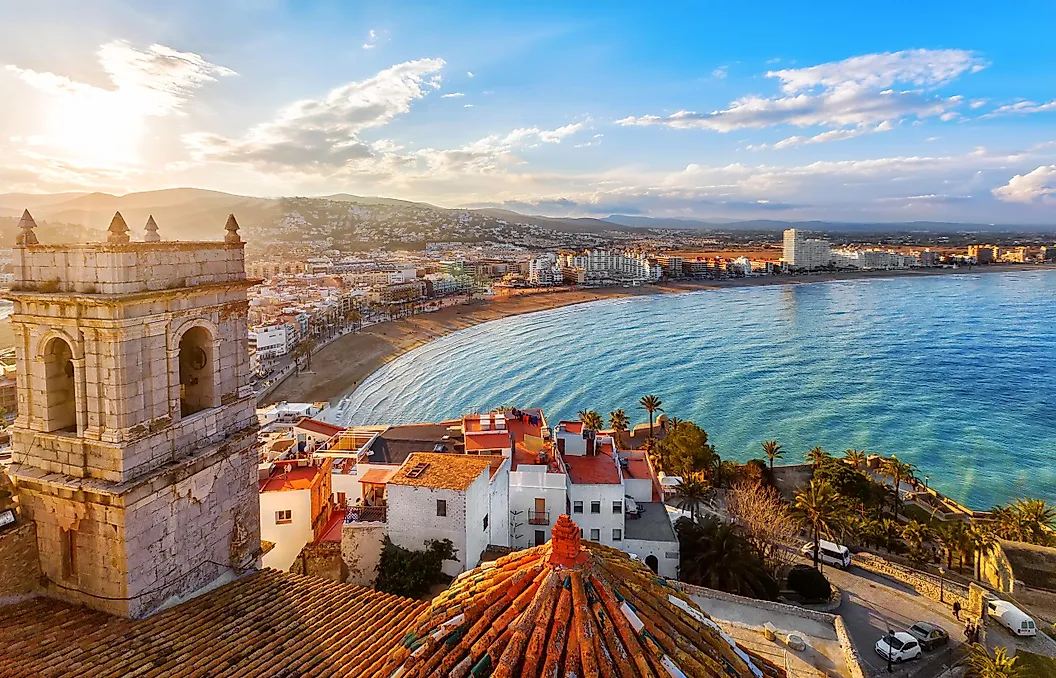
Along Spain's Costa del Azahar, Peñíscola combines medieval architecture with a slower and more affordable seaside lifestyle. The town's walled old quarter rises above the sea on a rocky peninsula crowned by the 13th-century Papa Luna Castle, named for Pedro Martínez de Luna who held court there as the antipope Benedict XIII from 1417 until his death in 1423. The castle served as a filming location for the city of Meereen in season six of HBO's Game of Thrones. Long sandy beaches line the waterfront below, while Sierra de Irta Natural Park has quieter trails and cycling routes away from the tourist center. The harbour district and beachfront promenades stay active year-round without feeling crowded, and the local housing market remains notably more affordable than the Costa del Sol or Costa Blanca.
Lugo

In northwestern Spain, Lugo offers retirees a greener and cooler alternative to the country's hotter southern coastlines. The Roman Walls of Lugo, built in the late 3rd and early 4th centuries AD to defend the Roman town of Lucus Augusti, form a complete 2.1-kilometer circuit around the historic center and are considered the finest surviving example of late Roman fortifications in western Europe. UNESCO inscribed the walls as a World Heritage Site in 2000. The walls now function as an elevated pedestrian walkway overlooking the old quarter. Santa María Cathedral, begun in 1129 in Romanesque style, anchors the historic center, and the city's Roman-era thermal baths still operate. Healthcare access is particularly strong thanks to Hospital Universitario Lucus Augusti, while housing prices in Lugo and the broader Galicia region are among the more affordable in Spain.
Mahón

The harbour city of Mahón, or Maó, on the island of Menorca, offers retirees Mediterranean island living without the intensity or price tags of Ibiza and Mallorca. Mahón Harbour, often cited as one of the longest natural harbours in the Mediterranean at about 5 kilometers, is a commercial and social hub with its marinas, waterfront cafés, and long seaside promenades. Nearby beaches such as Es Grau and Sa Mesquida provide quieter alternatives to Spain's busier resort coasts, while the 19th-century Fortaleza de La Mola at the eastern entrance to the harbour offers broad Mediterranean views. Hospital Mateu Orfila serves the island's healthcare needs, giving retirees dependable medical access despite the remote feel of Menorca's eastern end.
Estepona

Though often overshadowed by neighboring Marbella, Estepona offers a more approachable and less expensive version of Costa del Sol living. The old quarter is filled with flower-lined streets, tiled plazas, and pedestrian walkways that suit an active outdoor routine. Playa de la Rada stretches directly alongside the town, while the Estepona Orchid House holds more than 8,000 plants representing roughly 1,300 species beneath a trio of glass domes that rise above the town center, opened in 2015 by the municipal government. Selwo Aventura safari park and walking trails just outside town provide additional recreation. Retirees here benefit from major hospitals in nearby Marbella and Málaga, plus a growing number of clinics and senior-oriented residential communities.
Torrevieja

Torrevieja has long been a favorite for retirees seeking lower-cost coastal living combined with strong public infrastructure and an established expat community, with British, German, and Scandinavian residents making up a substantial share of the population. The seaside promenade remains active year-round, with public gathering spaces overlooking the Mediterranean. Las Salinas Natural Park nearby, known for its pink salt lagoons and birdlife (the pink coloring comes from Dunaliella salina algae that thrive in the hypersaline water), adds a distinctive natural landscape just outside the urban center. Long beaches like Playa del Cura and Playa de Los Náufragos provide accessible waterfront recreation, and the large weekly Friday market contributes to the town's lively atmosphere. Healthcare services are centered around Hospital Universitario de Torrevieja and several private clinics serving international residents.
Puerto de la Cruz

On Tenerife's northern coast, Puerto de la Cruz draws retirees with its subtropical gardens, volcanic coastline, and year-round spring-like climate. Lago Martiánez, a seawater swimming complex designed by Canarian artist and architect César Manrique and opened in 1977, sits along the waterfront and serves as one of the town's defining public spaces. Plaza del Charco is the social center of town, surrounded by traditional Canarian architecture, while the Botanical Garden founded in 1788 by order of King Carlos III offers shaded walking paths through tropical plant collections from the Spanish colonies. Black-sand beaches and oceanfront promenades reinforce the relaxed outdoor lifestyle that draws retirees from across Europe to the Canary Islands.
Picking The Right Spanish Town
The eleven towns split into rough regional clusters. The Andalusian coast produces Nerja, Almuñécar, Mojácar, and Estepona at the southern Mediterranean end. The Costa Blanca produces Denia, Jávea, and Torrevieja within easy reach of Alicante. Peñíscola sits on the Costa del Azahar between Valencia and Barcelona. Lugo offers the cooler, greener alternative in Galicia. Mahón and Puerto de la Cruz cover the island side, on Menorca and Tenerife. Each delivers a different climate, price point, and pace of daily life. The right choice depends on whether the retirement years call for sand and sea, mountain backdrops, an island rhythm, or the historic stones of a Roman city.


