
What Happens To Phoenix If Lake Mead Hits Dead Pool
If Lake Mead ever hit "dead pool," the doomsday point where its water drops too low to pass through Hoover Dam at all, what happens to Phoenix, the fifth-largest city in the country, baking right in the middle of the Sonoran Desert? The honest answer is messier, and a great deal less apocalyptic, than the scariest headlines suggest. Here is what would actually happen.
Where Phoenix Gets Its Water

First, a crucial fact that surprises most people: Phoenix does not actually get most of its water from the Colorado River. Roughly 40 percent of the city's supply comes from the Colorado, carried across the desert by the Central Arizona Project. But a larger share, about 58 percent, comes from the in-state Salt and Verde rivers, managed by the Salt River Project, with the final 2 percent or so drawn from groundwater. The Colorado matters a great deal to Phoenix, but it is not the majority of the city's water.
Dead Pool Shuts Off the Canal
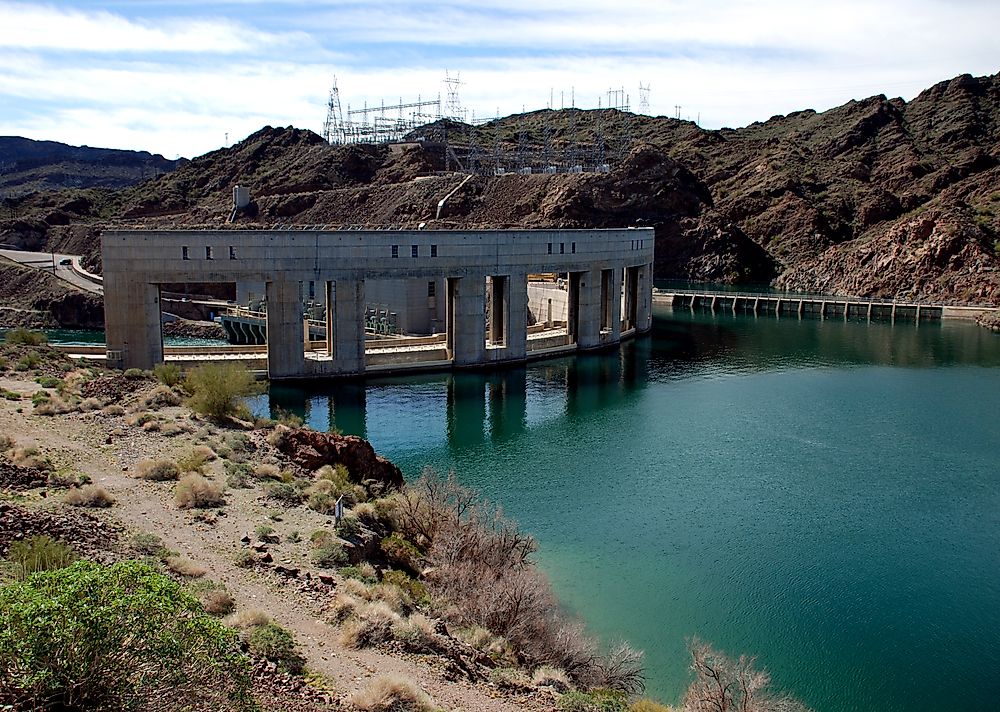
Here is the mechanism. The Colorado water Phoenix drinks is pumped out of Lake Havasu, a reservoir well downstream of Lake Mead, and hauled 336 miles uphill through the Central Arizona Project canal. But if Mead drops to dead pool, at an elevation of 895 feet, no water can pass through Hoover Dam at all, so nothing flows downstream to refill Lake Havasu or the canal's intake. The CAP would eventually run dry, and Phoenix would lose that 40 percent slice of its supply. In theory, an absolute catastrophe.
Arizona Gets Cut First Anyway
But here is the twist that changes the whole picture: Phoenix would lose most of that Colorado water long before Mead ever reached dead pool. Arizona holds the lowest-priority, or most "junior," rights on the river, and the CAP is first in line to be cut whenever the river falls short. Under the federal plan that took effect for 2027, the CAP already faces cuts of around 50 percent. By the time Lake Mead actually hit 895 feet, the canal to Phoenix would have been throttled back to a trickle for years. Dead pool would not be a sudden shock so much as the final, formal end of a supply that had already mostly dried up.
Why Phoenix Won't Go Dry

And this is where Phoenix's long game pays off. City officials are blunt that the taps will not run dry, and they have good reason. The Salt and Verde rivers, stored behind reservoirs like Roosevelt Lake in the mountains east of the city, are the resilient in-state backbone of the supply, and they are not tied to Lake Mead at all. On top of that, Phoenix has spent decades deliberately banking water underground, roughly 700,000 acre-feet of it, saved as insurance for exactly this scenario. Add a new $300 million drought pipeline that now pushes Salt and Verde water into Colorado-dependent north Phoenix, plus serious conservation and wastewater recycling, and the city has built itself a genuine cushion.
But It Will Cost Billions, and Hurt

None of that comes free, though. Replacing a huge chunk of the city's water means leaning much harder on groundwater, which is not renewable, can take centuries to refill, and literally causes the ground to crack and sink when it is overpumped. It means building billions of dollars of new pipelines, wells, and treatment plants. And it means higher water bills for everyone. Worse, the pain is not shared evenly. Hit first and hardest are the farmers, as Pinal County growers already lost their CAP water in the recent cutbacks and fallowed thousands of acres, followed by the outer suburbs and smaller cities that depend almost entirely on the Colorado. The established urban core is cushioned; the fast-growing edges are not.
A Hard Ceiling on Growth

The deepest consequence of all is the one that is hardest to see. Phoenix's explosive, decades-long growth was built on the assumption of cheap, plentiful Colorado River water. Take that away, and you slam a hard ceiling onto the old model. Arizona has already paused approval of some new subdivisions on the fringes that relied on dwindling groundwater, and a Phoenix stripped of its Colorado supply would be a more expensive, more tightly rationed, and slower-growing city than the one that boomed across the past half-century. So no, dead pool would not turn Phoenix into a ghost town. But it would finally force one of America's fastest-growing metros to live within the hard limits of the desert it was built in.


